
Research
Cardiovascular mechanics across scales.
My research connects experimentally measured behavior with computational models to explain how cardiovascular systems and interventions perform under realistic mechanical and hemodynamic conditions.
Current work extends established expertise in heart-valve mechanics to vascular tissues, myocardial mechanics, medical-device performance, and validated cardiovascular models.
Cardiovascular tissue and vessel mechanics
Measure how vascular, myocardial, and valvular tissues respond across spatial scales and clinically relevant loading conditions.
Medical-device and intervention mechanics
Study how device geometry, deployment, and anatomy influence performance, durability, and procedural risk.
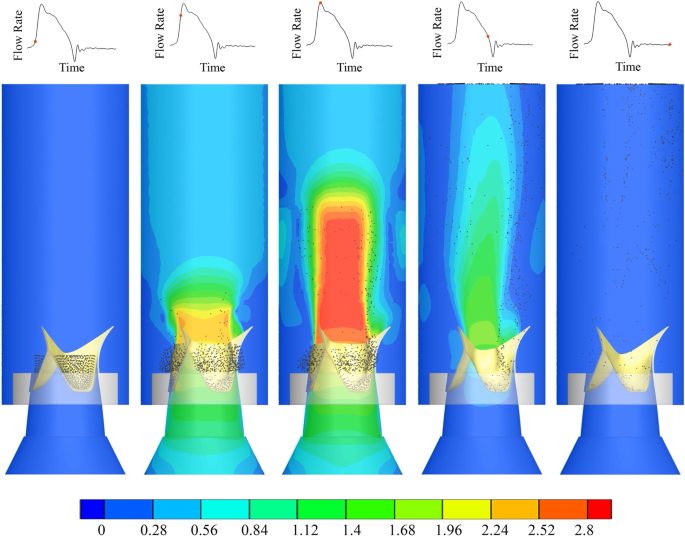
Hemodynamics and flow-structure interaction
Connect flow, tissue motion, and blood stasis to the mechanical behavior of cardiovascular devices.
Experimental characterization and model validation
Build experimentally informed workflows that connect benchtop measurements with predictive computational models.
Integrated workflow
Measure. Model. Validate. Translate.
Experiments and computation are not separate tracks. Each measurement sharpens a model; each model identifies the next useful measurement.
- 01
Measure
Resolve tissue behavior, leaflet motion, and device performance with optical and benchtop experiments.
- 02
Model
Build finite element, flow, and multiphysics models around clinically relevant anatomy and loading.
- 03
Validate
Connect simulations to measured deformation, strain, hemodynamics, and performance benchmarks.
- 04
Translate
Use mechanics to clarify design tradeoffs, procedural risk, durability, and future research questions.
Academic and research opportunities
Research collaboration and academic opportunities.
I welcome conversations with researchers, clinicians, and engineers working on cardiovascular tissues, blood flow, medical devices, and experimentally validated models.
Start a conversation